Fibreglass pool approval in NSW, QLD, VIC and the ACT
Updated November 2026 by Will Lenehan, Hull Pools
Yes. A new in-ground fibreglass pool needs approval before you dig in NSW, Queensland, Victoria and the ACT. In NSW it is a complying development certificate (CDC) if the pool meets the Housing Code standards, or a development application (DA) to council if it does not. In Queensland a building certifier gives building approval. In Victoria a registered building surveyor issues a building permit. In the ACT a building certifier approves it. Every certifier asks the same five things: where the pool sits, the pool size, the engineering, the design certificate and the fence.
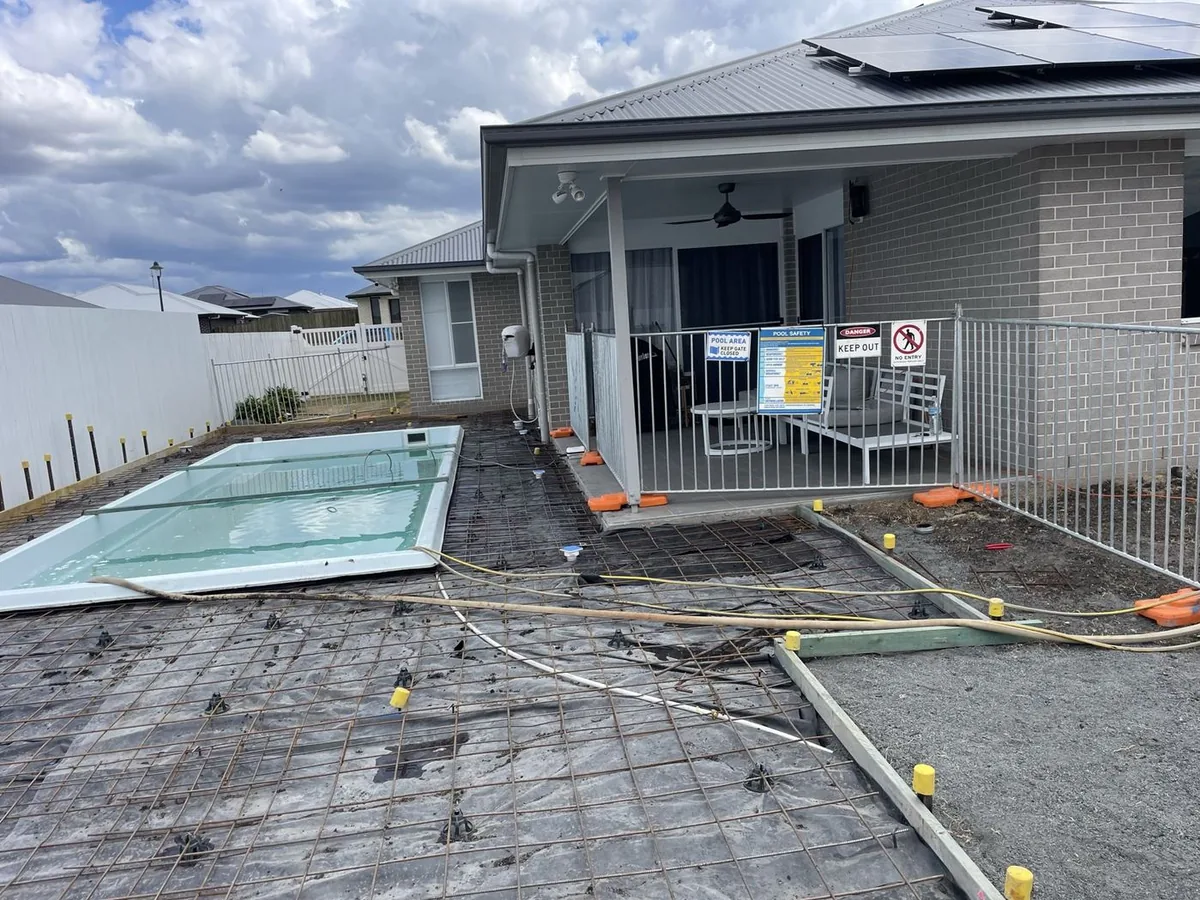
The short version, state by state
| NSW | A CDC from a certifier or council if the pool meets the Housing Code standards, or a DA to council if it does not. Design certificate: the NSW certificate of compliance. |
| Queensland | Building approval from a private certifier or a council certifier, sometimes with planning approval too. Design certificate: the Form 15. |
| Victoria | A building permit from a registered building surveyor, sometimes with a planning permit too. Then council registration with a barrier certificate. Design certificate: regulation 126. |
| ACT | Building approval from a building certifier. No DA if the pool meets the exemption rules. Design certificate: the NSW certificate of compliance, which covers the ACT. |
What your certifier needs: the checklist
Certifiers in all four states ask about the same things: where the pool sits, how big it is, the engineering, the certificate and the fence. That comes down to five documents. The pack is the same whether your block goes CDC or DA.
| 1. Site plan (from you) | Where the pool sits on the block, with the distances to every boundary and to the house. Your builder or a draftsperson can draw it over your survey. |
| 2. Pool fence plan (from you) | Where the barrier goes, the gates and what it is made of, designed to AS 1926.1. A good pool fencer will know the standard. |
| 3. Shell engineering drawing (from us) | The engineered drawing of your shell, with its length, width and depth. |
| 4. Standard installation details (from us) | How the shell is bedded, backfilled and finished, engineered to AS 1839, the standard for fibreglass pools. |
| 5. State design certificate (from us) | The NSW certificate of compliance (also for the ACT), the Queensland Form 15 or the Victorian regulation 126 certificate. |
On a flood-affected block, tell us and we add the flood certificate to the pack. Your certifier tells you if your site needs anything else, for example an engineer’s report on a difficult site.
NSW: CDC or DA
Which path you are on depends on your block and where the pool sits on it, not on the pool. The pool can go through as complying development, with a CDC from a certifier or council, if it meets every standard in clause 3.28 of the Housing Code. Planning NSW names the first two:
- it is for private use with a dwelling house, and sits behind the building line of the house;
- the water line is at least 1 m from any side or rear boundary.
If the pool cannot meet a standard, or the land rules out complying development (a heritage item or a coastal hazard area, for example), it is a DA to council. Either way a principal certifier is appointed, and the NSW Government says they inspect the permanent fence before anyone swims. New pools follow AS 1926.1-2012, no one uses the pool until an occupation certificate is issued, and it goes on the NSW Swimming Pool Register.
The full detail, including the coping and decking heights and the rules for heritage, bushfire and flood lots, is in our NSW pool approval guide. For heritage streets, foreshore lots and bush fire maps on Sydney’s North Shore, see pools on the North Shore.
Queensland: a private certifier
The QBCC says that before building a pool you must get building approvals from your local council or a private certifier. In practice you or your builder engage a private certifier, who lodges the documents with council, or a certifier through council. The certifier tells you if you also need planning approval, for example in a special zone, or approval to build over a sewer line.
- The design certificate is the Form 15, the compliance certificate for building design or specification. Ours covers the shell.
- The fence must meet Queensland Development Code MP 3.4, which calls up AS 1926.
- The certifier inspects the fence before the pool is filled past 300 mm, then issues a Form 17 or Form 11 and sends a copy to the QBCC, which puts the pool on the register.
More on the warning sign, temporary fencing and the pool safety certificate in our Queensland pool approval guide.
Victoria: a building permit and council registration
The Building and Plumbing Commission (the Victorian Building Authority’s trading name) says you need a building permit before installing a pool or its safety barrier unless the work is exempt, and the owner appoints a registered building surveyor, private or municipal, to issue it. You may also need a planning permit, so check with council.
- The permit application includes drawings and specifications of the pool, the safety barrier and the filtration system, showing they comply with the National Construction Code and AS 1926.
- The design certificate is a certificate of compliance for proposed building work, the form set by regulation 126 of the Building Regulations 2018. It certifies that the design complies.
- Work must start within 12 months of the permit and finish within 6 months of starting.
- Barriers must comply with AS 1926.1-2012 with self-closing, self-latching gates, and a new outdoor pool area must not be directly accessible from a building.
- Once it is built you register the pool with council and lodge a certificate of barrier compliance within 30 days of the occupancy permit or certificate of final inspection. A new barrier certificate is lodged every four years.
ACT: a building certifier
Under the Building Act 2004, a pool that can hold more than 300 mm of water needs building approval, a pool builder and a building certifier, with plans, inspections and certificates. A DA is a separate question. ACT Planning says a pool does not need one if:
- it is not between the front boundary and the building line, unless it is behind a courtyard wall;
- it is not within 1.5 m of a side or rear boundary;
- any deck, landing or stairs for it are no more than 1 m above finished ground;
- the pool is no more than 1.5 m above datum ground level.
Outside those rules it needs a DA. The barrier for a new pool must meet the Building Code and the Australian Standards it calls up, which for a pool barrier means AS 1926.1, and a certifier inspects and certifies it. For the design, our engineer has confirmed the NSW certificate of compliance covers ACT sites, so it goes in your pack with the drawing and the installation details.
Where Hull Pools fits: approval first, deposit second
We supply the complete kit delivered across NSW, the ACT, Queensland and Victoria, and you or your builder lodge the approval. Where our licensed crew installs, in Greater Sydney and on the Central Coast, we work through it with you and your certifier. Either way:
- Pick your pool and size and ask for the engineering pack from your quote page. It is free, before any deposit.
- Send it to yourself or straight to your certifier. We answer their questions about the shell and the engineering.
- Your price holds while the approval goes through. Once you have it, you confirm and the shell is on site in about 6 to 8 weeks.
Doing it yourself? Our owner-builder guide covers the permits, and supply only explains what the kit includes.
Common questions
Do I need council approval for a fibreglass pool?
Yes, in all four states we deliver to. In NSW it is a CDC from a certifier or council, or a DA to council. In Queensland it is building approval from a private certifier or a council certifier. In Victoria it is a building permit from a registered building surveyor, private or municipal. In the ACT it is building approval from a building certifier. Some blocks also need a planning approval on top.
CDC or DA for a pool in NSW?
A CDC if the pool meets every standard in clause 3.28 of the Housing Code, for example sitting behind the building line of the house with the water line at least 1 m from the side and rear boundaries. A DA to council if it does not, or if the land rules out complying development, such as a heritage item or a coastal hazard area. The engineering pack is the same either way.
What does a certifier need for a pool?
Five things: a site plan showing where the pool sits with the distances to the boundaries and the house, the pool fence plan to AS 1926.1, the engineered shell drawing with the pool's size, the standard installation details, and the design certificate for your state. You supply the first two. We supply the last three, free.
What design certificate does a fibreglass pool need?
In NSW, the engineer's certificate of compliance for the shell design, which also covers the ACT. In Queensland, a Form 15, the compliance certificate for building design or specification. In Victoria, a certificate of compliance for proposed building work under regulation 126 of the Building Regulations 2018. All three come in our engineering pack.
Do I need a building permit for a pool in Victoria?
Yes, unless the work is exempt. The owner appoints a registered building surveyor, private or municipal, to issue it, and you may also need a planning permit. Work must start within 12 months of the permit and finish within 6 months of starting. Once built, the pool is registered with council with a certificate of barrier compliance, within 30 days of the occupancy permit or certificate of final inspection.
Do I need a DA for a pool in the ACT?
Not if the pool meets the exemption rules: not between the front boundary and the building line (unless behind a courtyard wall), not within 1.5 m of a side or rear boundary, any deck no more than 1 m above finished ground, and the pool no more than 1.5 m above datum ground level. You still need building approval and a building certifier for a pool that holds more than 300 mm of water.
Who approves a pool in Queensland?
A licensed building certifier. You or your builder engage a private certifier, who lodges the documents with council, or a certifier through council. The certifier inspects the fence before the pool is filled past 300 mm and issues a Form 17 or Form 11, and tells you if you also need planning approval.
Can I get approval before I pay Hull Pools a deposit?
Yes, and most people do. Pick your pool and size and we send the engineering pack free before any deposit, to you or straight to your certifier from your quote page. Your price holds while the approval goes through.
Get your price, then your approval
Pick a pool and put in your postcode for a delivered price. The engineering pack for your certifier comes free with the quote. It depends on the pool, size, equipment package and road distance.
Get my priceQuestions about your block? Give us a shout on 0415 140 001