Pool approval in NSW: CDC, DA, the fence and the register
Yes. A new fibreglass pool in NSW needs approval before you dig. If it meets the Housing Code pool standards it can go through as complying development, a CDC from a certifier or council. If not, it needs a DA from council. Either way it needs a child-resistant barrier to AS 1926.1-2012 and registration on the NSW Swimming Pool Register before anyone swims.
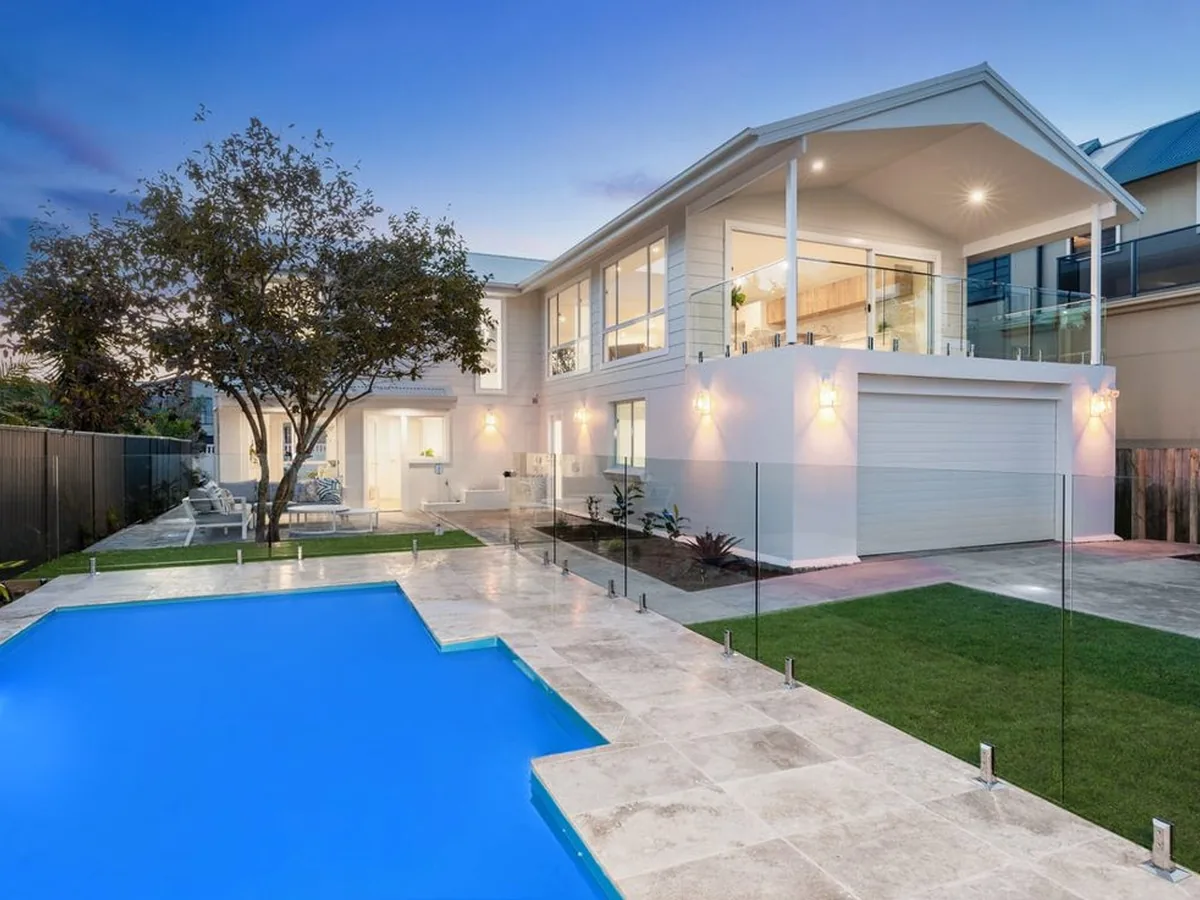
Two ways to get approval: CDC or DA
There are two approval paths for a backyard pool in NSW. Which one you are on depends on your block and where the pool sits on it, not on the pool itself.
| Complying development (CDC) | The fast track. It combines planning and construction approval in one certificate, issued by council or an accredited certifier, and can be issued in as little as 20 days. It only works if the pool meets every Housing Code standard below. |
| Development application (DA) | A development application to council with a statement of environmental effects. For anything that does not meet the standards, or sits on land where complying development is not allowed. |
Either way, a principal certifier (council or a private certifier) has to be appointed for the build, the NSW Government says, and they inspect the permanent fence before the pool can be used.
The CDC standards for a pool
The rules for a pool as complying development are in clause 3.28 of the Housing Code, in the State Environmental Planning Policy (Exempt and Complying Development Codes) 2008. The Planning Portal summarises the first few. In plain terms, the pool must:
- be for private use and go with a dwelling house;
- sit behind the building line of the house, which in practice means not in the front yard;
- have its water line at least 1 m from any side or rear boundary;
- on a corner block, sit at least as far back from the secondary road as the house does;
- have coping no more than 1.4 m above existing ground level, and no more than 300 mm wide where it sits more than 600 mm above existing ground;
- have any decking around it no more than 600 mm above existing ground level;
- have the pump in a soundproofed enclosure, more than 450 mm from each boundary;
- have any heat pump quiet enough that it is no more than 5 dB(A) above background noise at the boundary in peak time, and not audible inside the neighbours’ habitable rooms off peak;
- if the lot is not connected to a sewer main, discharge its water in line with an approval under the Local Government Act 1993.
The same clause notes that the child-resistant barrier must meet the Swimming Pools Act 1992 (more on that below). These standards are from the version of the policy in force from 11 September 2026.
The Planning Portal adds that all work must be structurally adequate, installed to the manufacturer’s specifications and comply with the Building Code of Australia. For a fibreglass pool, the manufacturer’s specifications are the shell drawing and installation details in your engineering pack.
When you need a DA instead
You need a DA when the pool cannot meet one of those standards, for example a pool in the front yard, closer than 1 m to a boundary, or with coping or decking higher than the limits. You also need one on land where complying development is generally not allowed. The Planning Portal lists these, including:
- a heritage item, or land subject to an interim heritage order (unless there is an exemption under the Heritage Act 1977);
- land in a foreshore area, or land affected by a coastline or coastal erosion hazard;
- environmentally sensitive land, or land in an ecologically sensitive or protected area;
- class 1 or 2 land on council’s acid sulfate soils map;
- land reserved for a public purpose.
Three things people expect to rule a CDC out, but do not always:
- Heritage conservation areas. A pool can still be a CDC if it sits behind the rear building line of the house and no closer to each side boundary than the house is (clause 3.28(8)). Conservation areas are common on the North Shore; our North Shore page links each council’s heritage rules.
- Bushfire prone land. Complying development is possible, subject to the Housing Code’s bushfire requirements (clause 3.4).
- Flood prone lots. Also possible, subject to the flood control lot standards (clause 3.5).
To see which of these apply to your address, put it into the NSW Planning Portal’s Spatial Viewer, which shows the zoning and planning constraints for every lot. Or let us read it for you in a Block Report (below).
The barrier: AS 1926.1-2012
A pool in NSW must be surrounded by a child-resistant barrier that separates it from the house and from any neighbouring property. For a new pool the rules are the Swimming Pools Act 1992, the Swimming Pools Regulation 2018 and AS 1926.1-2012. The key measurements the NSW Government publishes:
| Height | At least 1.2 m from finished ground level |
| Gap at the bottom | No more than 10 cm |
| Boundary fence used as the barrier | 1.8 m high |
| Gaps between vertical bars | No more than 10 cm |
| Horizontal climbable bars | At least 90 cm apart |
| Non-climbable zone | 90 cm arc from the top of the fence, plus 30 cm inside the pool area, kept clear of anything a child could climb |
| Gates | Swing outward from the pool, close on their own from any open position, and self-latch |
Doors and windows can no longer form part of the barrier. While the pool is being built it needs child-resistant temporary fencing, and the permanent fence is inspected by your principal certifier once it is in. The barrier is not part of a pool kit: you or your builder organise it, and your fencer will know AS 1926.1.
During the build: the “not to be used” sign
From the start of construction a new pool needs a sign near it that reads “This swimming pool is not to be occupied or used”. It stays up until a certificate of compliance or an occupation certificate is issued, and leaving it off can mean a penalty notice under the Swimming Pools Regulation 2018.
Registering on the NSW Swimming Pool Register
- Every pool goes on the NSW Swimming Pool Register.
- A new pool must be registered as soon as practicable after construction is complete and before it is used.
- It is free if you do it yourself online, with no account needed. Your council can do it for you for a fee of up to $10.
- Pools are registered against the property address, not the owner’s name.
- Registration is not a compliance check. Compliance is assessed separately, by inspection.
The CPR sign
NSW law requires a CPR sign displayed near the pool, in good condition and readable from 3 m away. New pools must use the updated signage that came into effect on 1 September 2019. Our handover kit includes one.
Before anyone swims: the occupation certificate
The NSW Government’s list for a new pool ends with two rules: arrange an inspection by the principal certifier once the permanent fence is installed, and do not let anyone use the pool until an occupation certificate has been issued. That is the finish line for approval.
Later on, if you sell or lease, your council or a registered pool inspector can inspect and issue a certificate of compliance for the barrier. It lives on the register and is valid for 3 years from the date of issue.
Where Hull Pools fits: approval first, deposit second
When our crew installs in Sydney or on the Central Coast, we work through the approval with you and your certifier. When you or your builder install, you or your certifier lodge it. What we do is make that easy, before you spend anything:
- Pick your model and size on the range and ask for the engineering pack. We send it free, before any deposit.
- It has the engineered shell drawing, the standard installation details to AS 1839, and the NSW Certificate of Compliance.
- Your certifier works from it, and we answer their questions about the shell and the engineering.
- Your quote holds for 30 days and we can extend it while the approval goes through. Once you have approval, you confirm and the shell goes into production, about 6 to 8 weeks to your site.
The NSW Government also says that if the pool work costs more than $5,000 the person doing it must hold a licence from Building Commission NSW, and that if you coordinate two or more contractors yourself on work valued at more than $10,000 you need an owner-builder permit. Our owner-builder guide covers that path, and supply only explains what the kit includes. For a delivered price on your pool, use the price calculator; it depends on the pool, size, equipment package and road distance.
Next steps
- Check your block first. Our free Block Report reads the cadastre and the planning maps for your address and gives you one page on the fit, the access and your likely approval path.
- See it in your yard. The yard planner drops any pool in our range onto your backyard at true scale, so you can check the 1 m setbacks before you talk to a certifier.
- Plan the install. The install guide walks through what happens once approval is in hand.
Common questions
Do I need council approval for a fibreglass pool in NSW?
Yes. A new in-ground pool needs approval before work starts. If it meets the Housing Code pool standards it can be approved as complying development, with a complying development certificate (CDC) from a registered certifier or council. If it does not, it needs a development application (DA) to council. Your certifier or council confirms which path your block is on.
What is the difference between a CDC and a DA for a pool?
A CDC is the fast track. It combines planning and construction approval, is issued by council or an accredited certifier, and the Planning Portal says it can be issued in as little as 20 days. It only works if the pool meets every standard in the Housing Code. A DA is a full development application to council for anything that does not fit those standards or sits on land where complying development is not allowed.
How close to the boundary can a pool be in NSW?
Under the Housing Code, the pool's water line must be at least 1 m from a side or rear boundary, and the pump must be in a soundproofed enclosure more than 450 mm from each boundary. A pool closer than that is not complying development and would need a DA.
How high does a pool fence need to be in NSW?
At least 1.2 m from finished ground level, with no gap under it bigger than 10 cm. Where a boundary fence forms part of the pool barrier it must be 1.8 m high. New pools follow AS 1926.1-2012, the Swimming Pools Act 1992 and the Swimming Pools Regulation 2018.
Do I have to register my pool in NSW?
Yes. Every pool goes on the NSW Swimming Pool Register. A new pool must be registered as soon as practicable after construction is complete and before it is used. It is free online, or your council can do it for a fee of up to $10. Registration is not a compliance check; that is a separate inspection.
Can I get approval before I pay Hull Pools a deposit?
Yes, and we recommend it. Pick your pool and size and we send the engineering pack free before any deposit: the engineered shell drawing, the standard installation details to AS 1839 and the NSW Certificate of Compliance. Your certifier works from these. Your quote holds for 30 days and we can extend it while the approval goes through.
Not sure which path your block is on?
Send us your address and the pool you like. The Block Report comes back with the fit, the access and your likely approval path, free and before you spend anything.
Get my Block ReportOr call Will on 0415 140 001