Fibreglass pool problems, and how each one is avoided
Most fibreglass pool problems people post about come from the install or the water, not the shell. Here are the ones buyers ask us about, what causes each, and how it is avoided.
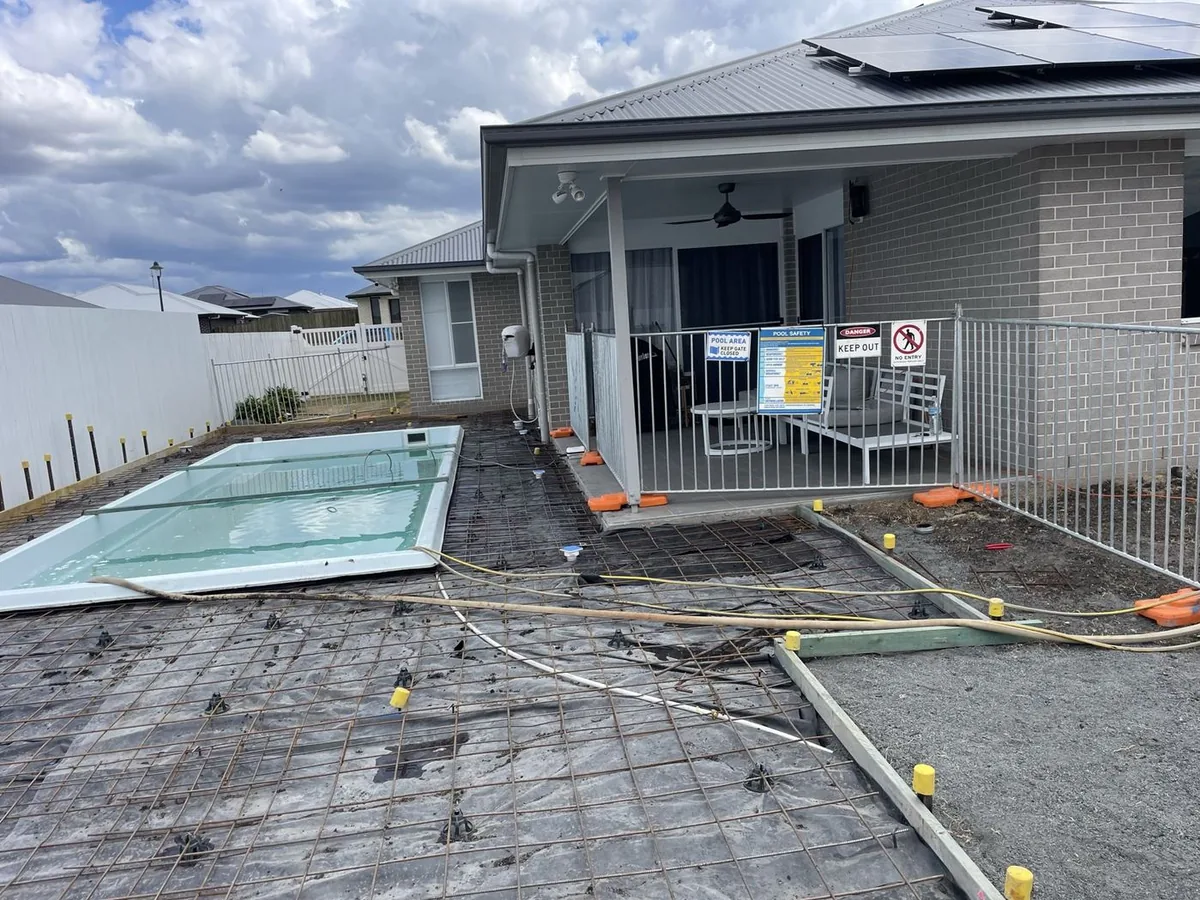
1. Cracks in the shell
What causes it. The shell is not supported evenly: a base that was not level, voids in the backfill, or backfill pushed in dry and fast while the pool is empty.
How it is avoided. A compacted base screeded level, then backfill placed in lifts in step with the water going in, so the pressure inside and out stays balanced. The engineer’s install details for your shell set out how. Fine crazing in the gelcoat surface is cosmetic; the shell itself carries a 25-year structural warranty.
2. A pool that lifts out of the ground
What causes it. Groundwater. An empty shell is light, and water in the ground around it pushes up. It happens when a pool is drained on a wet site.
How it is avoided. The hydrostatic valve in the install details, extra drainage on wet or sandy blocks, and one simple rule: do not empty the pool without asking first. On the Northern Beaches and the Central Coast, where sand and high water tables are common, this matters most.
3. Off level, or walls that bulge
What causes it. A soft or uneven base, or backfill loaded against the walls before there is water inside to push back.
How it is avoided. The same base and backfill method as above, and the bond beam poured only once the shell has settled. A level check before backfill catches it while it is still easy to fix.
4. Faded or stained gelcoat
What causes it. Water chemistry: low pH, very high chlorine, metals in the water, and copper-based algaecides.
How it is avoided. Keep the water balanced. The Essentials and Comfort packages come with a self-cleaning mineral chlorinator and automatic pH control, and Effortless runs a freshwater system, so the water stays steady without the weekly guesswork. Use a soft brush, and skip copper products.
5. Leaks at the fittings
What causes it. Plumbing joints that were never pressure tested before they were buried.
How it is avoided. Pressure test the pipework before backfill, so any weep is found while it is still in the open.
6. The limits of fibreglass
A shell comes in set shapes and sizes, and it has to get into your yard in one piece, by truck or crane. If you want a shape no mould makes, or your block has no crane reach, concrete is the better pick. Fibreglass vs concrete, side by side.
Questions, answered
Do fibreglass pools crack?
A well-installed fibreglass shell rarely cracks. Structural cracks almost always trace back to the install: a base that was not level or backfill that left voids, so the shell was not supported evenly. Fine surface crazing in the gelcoat is cosmetic. The shell carries a 25-year structural warranty.
Can a fibreglass pool pop out of the ground?
Only if it is emptied while there is groundwater around it, because the water pushes up on an empty shell. The install includes the hydrostatic valve from the engineer's details, and you should not drain the pool without advice first.
How do I keep the gelcoat looking new?
Keep the water balanced. Low pH, very high chlorine, metals in the water and copper-based algaecides are what fade or stain gelcoat. Every kit includes automatic pH control, which does most of the work.
Worried about any of these on your block?
Tell us where you are and the pool you like. We look at your block before anything is quoted.
Get a quote Get my priceOr give us a shout on 0415 140 001